Analyzing Viewership Shifts in Rugby Union and Boxing Due to Changing Media Consumption Habits Among UK Fans
Willa Klein · Sep 3, 2026
Analyzing Viewership Shifts in Rugby Union and Boxing Due to Changing Media Consumption Habits Among UK Fans
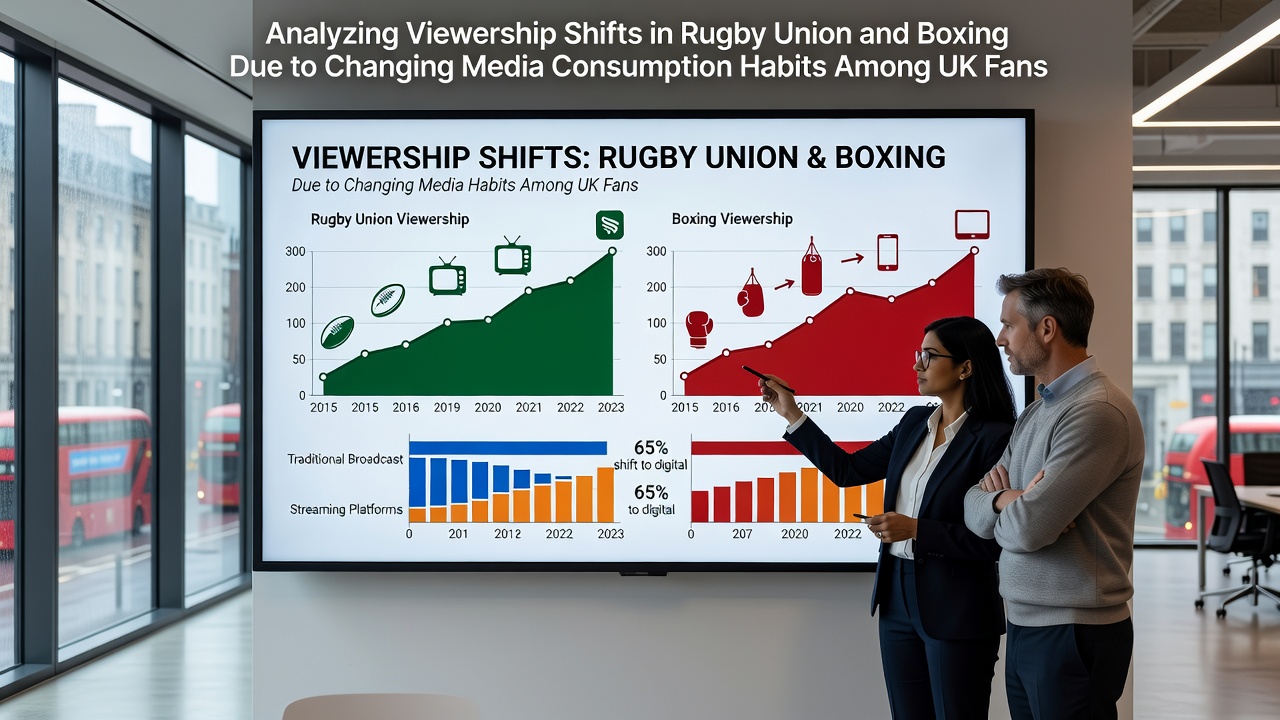
Media consumption patterns across the UK have evolved rapidly in recent years as fans move away from traditional broadcast schedules toward on-demand platforms and short-form digital content, and this transition has directly influenced how audiences engage with both rugby union and boxing events. Data from regulatory bodies shows that younger demographics in particular now access live sports through smartphones and tablets rather than fixed television sets, which creates new challenges for rights holders who once relied on linear viewership figures.
Rugby Union Adapts to Platform Fragmentation
Premier Rugby and the Six Nations tournament have experienced measurable changes in audience distribution since streaming services entered the market, with matches appearing on platforms such as Amazon Prime Video alongside established broadcasters like ITV and BBC. Figures reveal that peak audiences for autumn internationals remain substantial, yet the composition of those audiences has shifted because many supporters now watch highlights clips on social media within minutes of key moments rather than committing to full ninety-minute broadcasts. Researchers at academic institutions have documented this behavior through surveys that track second-screen usage, showing that fans frequently switch between live feeds and commentary on X or TikTok during matches.
Clubs in the Gallagher Premiership have responded by producing their own digital content packages, which include behind-the-scenes footage and player interviews released exclusively on club apps and YouTube channels. These supplementary materials help maintain engagement even when live match viewership fragments across multiple providers, and they also generate additional revenue streams that were unavailable under older media models. Observers note that this approach mirrors strategies already adopted in other European leagues where rights deals incorporate digital-first clauses.
Boxing Responds to Pay-Per-View and Streaming Models
Boxing promotions have accelerated their move toward direct-to-consumer streaming, with DAZN securing long-term rights that allow UK fans to purchase individual fight cards or subscribe monthly. Traditional free-to-air exposure on channels such as Channel 5 has declined for non-title bouts, pushing casual viewers toward highlight reels shared on Instagram and YouTube rather than full-event purchases. Industry reports indicate that this model delivers higher per-fight revenue from dedicated supporters while simultaneously reducing overall reach among occasional audiences who once discovered boxing through terrestrial television.
Promoters have introduced hybrid cards that combine established names with emerging prospects, aiming to build long-term subscriber loyalty through consistent programming. Data shows that fight-week build-up content, including press conferences and training footage, now drives significant traffic on social platforms, often outperforming the live event itself in total views. Those who study audience metrics point out that boxing benefits from short, high-intensity moments that translate well to vertical video formats popular on mobile devices.
Broader Media Consumption Drivers
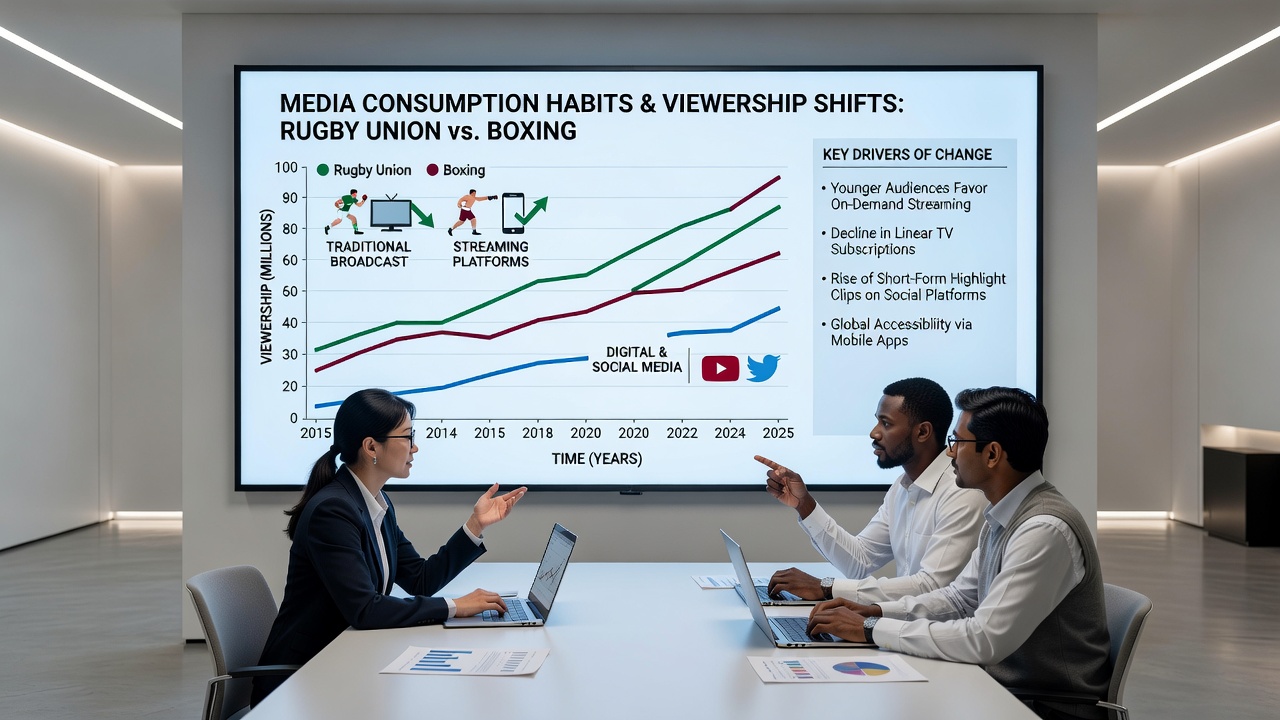
According to Ofcom research, the proportion of UK households relying solely on broadband connections for video content continues to rise, which reduces the automatic reach of scheduled sports broadcasts. This infrastructure shift coincides with the growth of short-form platforms that prioritize quick consumption, prompting rights holders in both rugby union and boxing to create tailored highlight packages that fit within attention spans measured in seconds rather than minutes. Advertising models have adjusted accordingly, moving toward programmatic placement within streaming environments where viewer data allows more precise targeting than traditional spot advertising permitted.
Time-shifted viewing through catch-up services has become standard for midweek rugby matches and boxing undercards, allowing fans to skip breaks and focus only on active periods. Nielsen data compiled across multiple territories shows similar patterns emerging among comparable demographics, confirming that the UK experience reflects wider international trends in sports media. Rights negotiations now routinely include clauses that guarantee minimum digital exposure alongside linear commitments, reflecting the new balance between platforms.
Looking Ahead to September 2026
Events scheduled for September 2026, including the start of the new Premiership season and several high-profile boxing cards, will test whether current distribution strategies continue to deliver sustainable audiences. Organizers are preparing enhanced interactive features such as multi-angle streams and real-time statistics overlays that integrate directly with mobile apps, aiming to retain viewers who might otherwise exit after the initial action. These preparations build on existing infrastructure investments made by both governing bodies and commercial partners.
Conclusion
The combined effect of platform diversification, mobile-first habits, and evolving content formats has produced a measurable redistribution of viewership across rugby union and boxing in the UK. Rights holders continue to refine their approaches by balancing live broadcast deals with digital engagement tools, while data from sources such as Nielsen audience reports provides ongoing benchmarks for measuring success. As infrastructure and viewer preferences keep evolving, both sports demonstrate ongoing adaptation through expanded content ecosystems that extend beyond the final whistle or final bell.