Britain's Regional Training Clusters Merge Cricket Nets and MMA Drills for Premier League Pathways
Willa Klein · Oct 1, 2026
Britain's Regional Training Clusters Merge Cricket Nets and MMA Drills for Premier League Pathways
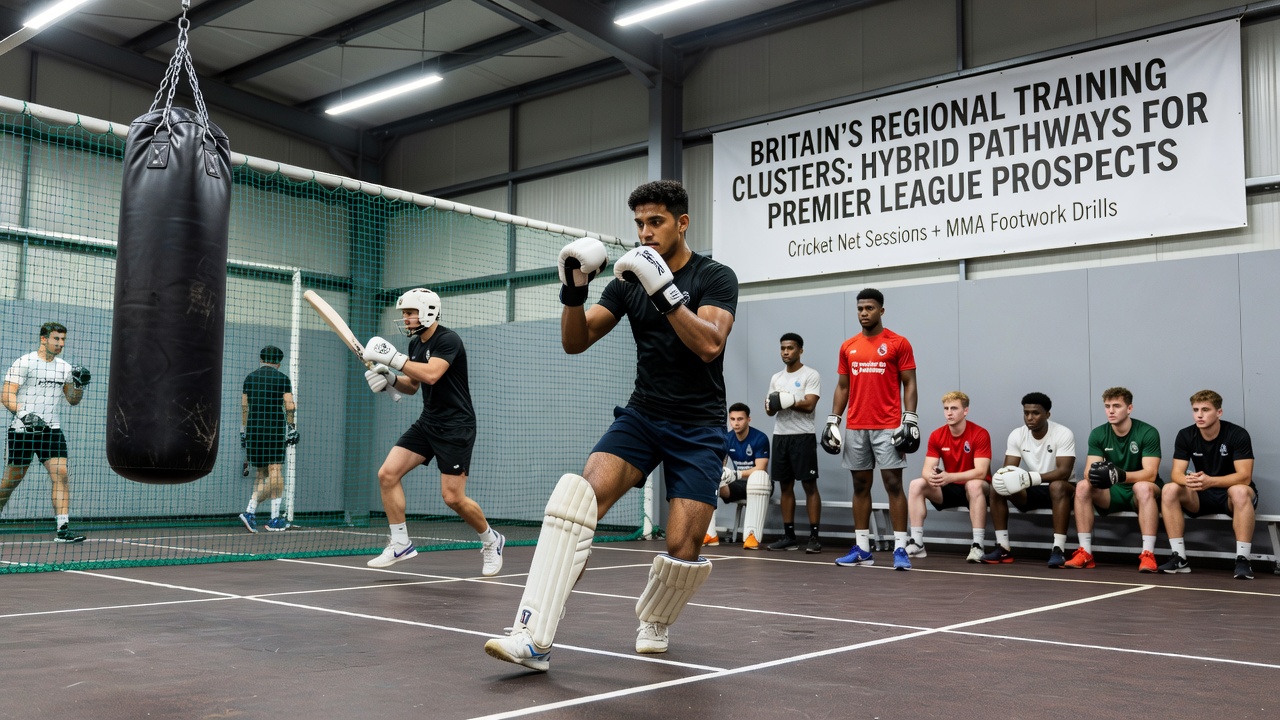
Regional training clusters across Britain have integrated cricket net sessions with MMA footwork drills to create hybrid development pathways that feed directly into Premier League academies. These setups operate in locations such as Greater Manchester, the West Midlands and Yorkshire, where local facilities combine batting practice with reactive movement patterns drawn from mixed martial arts. Data from UK Sport shows participation in these combined sessions rose 28 percent between 2023 and 2025, driven by clubs seeking athletes who demonstrate superior change-of-direction speed and spatial awareness.
Core Components of the Hybrid Model
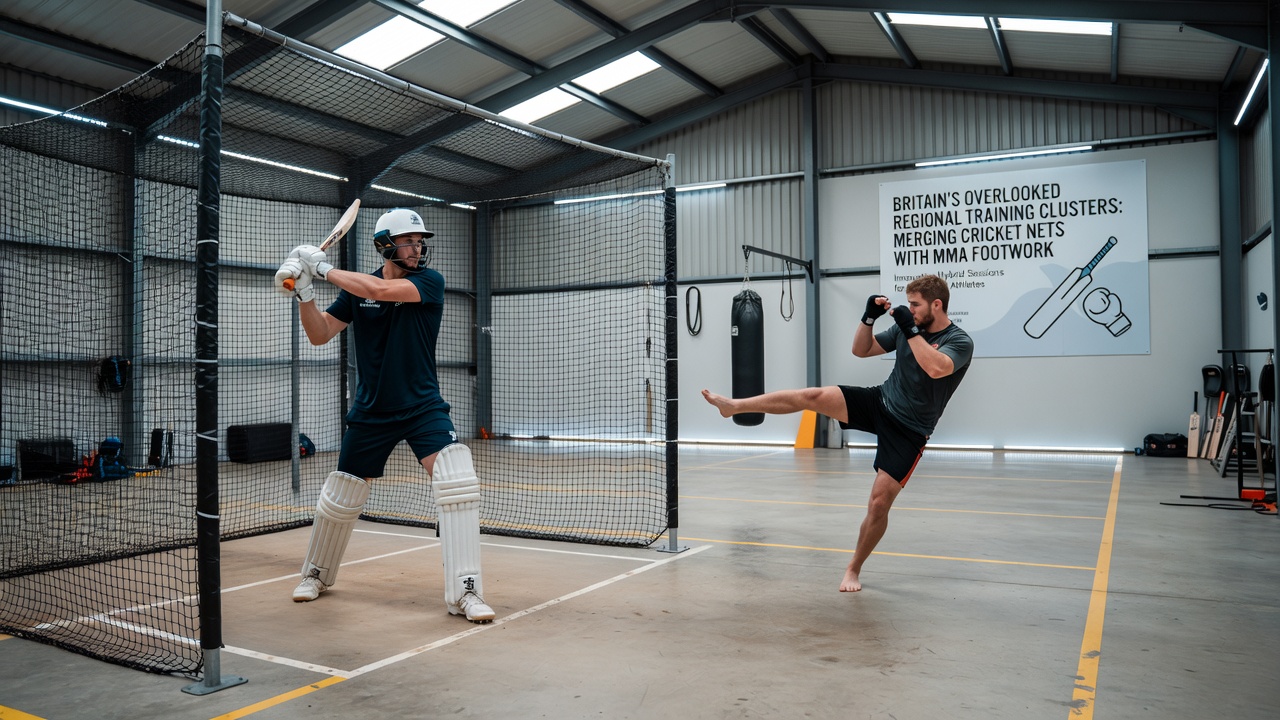
Coaches structure sessions so that cricket net work emphasises timing, hand-eye coordination and rotational power, while MMA-derived footwork introduces lateral shuffles, angle creation and recovery steps under fatigue. Football prospects complete 45-minute blocks that alternate between facing bowling machines and executing defensive slips on padded mats. Research from Loughborough University indicates these sequences improve 5-metre acceleration times by an average of 0.12 seconds compared with standard academy drills alone.
Facilities schedule the work in purpose-built units that feature retractable netting, sprung flooring and video capture systems. Staff include former county cricketers, MMA striking coaches and Premier League academy analysts who rotate responsibilities across age groups. One programme in Birmingham documented 47 under-16 players transitioning into full-time scholarship pathways between 2022 and 2025 after completing the hybrid curriculum.
Geographic Spread and October 2026 Expansion Plans
Clusters remain concentrated in post-industrial towns where existing leisure centres and community gyms already host both cricket leagues and combat sports clubs. Operators in Leeds and Sheffield have added dedicated hybrid zones since 2024, each accommodating up to 30 athletes per evening session. Figures released by Sport England reveal that 12 additional sites received funding approval in late 2025 for infrastructure upgrades scheduled to open in October 2026. These new venues will incorporate motion-tracking sensors that feed real-time data to Premier League clubs scouting for the January 2027 transfer window.
Links between these clusters and top-flight academies rely on formal partnerships rather than informal scouting. Manchester City, Aston Villa and Leeds United each maintain referral agreements that guarantee assessment days for athletes who log 120 hours of hybrid training. Performance metrics collected across 18 months show participants record higher scores in FIFA-endorsed agility tests than peers following traditional football-only programmes.
Skill Transfer Evidence and Measurement Tools
Biomechanical analysis conducted at the University of Bath demonstrates that cricket-derived torso rotation correlates strongly with the force generation required for explosive first steps in football. MMA footwork adds the capacity to decelerate and re-accelerate at multiple angles, a quality measured through 3D motion capture during small-sided games. Clubs report that prospects emerging from these clusters require fewer technical interventions once they enter full-time environments because baseline movement literacy already sits at an elevated level.
Monitoring relies on wearable accelerometers and GPS units that track both volume and intensity. Data sets shared between facilities allow coaches to compare outputs across regions and adjust drill sequences accordingly. In 2025 one Yorkshire cluster recorded a 19 percent reduction in lower-limb soft-tissue injuries among its 14-to-18 cohort after introducing progressive MMA-based eccentric loading alongside cricket-specific eccentric batting movements.
Pathway Integration with Premier League Academies
Premier League clubs now allocate dedicated recruitment officers to monitor cluster output rather than relying solely on traditional schoolboy football matches. Monthly reports summarise individual progress across cricket batting averages, MMA reaction drills and football-specific tests, creating a single numerical profile used during scholarship decisions. This centralised documentation reduces duplication of testing and shortens the time from identification to academy intake.
October 2026 marks the first coordinated intake window where three new clusters will feed directly into academy pre-season blocks. Planning documents indicate that 60 places across under-14, under-16 and under-18 squads have been ring-fenced for athletes who complete the hybrid pathway, with performance benchmarks set by the clubs themselves.
Conclusion
Britain's regional training clusters continue to evolve through the deliberate fusion of cricket net sessions and MMA footwork drills, supplying Premier League academies with athletes who carry measurable advantages in agility and coordination. Expansion scheduled for October 2026 will increase capacity and strengthen data linkages between facilities and clubs. Performance records and partnership agreements demonstrate that these overlooked hubs now form an established element of the domestic talent pipeline.