How Data Analytics Are Transforming Training Regimens for Athletes in Golf, Tennis, and Horse Racing Across Britain
Dana Franke · Sep 17, 2026

How Data Analytics Are Transforming Training Regimens for Athletes in Golf, Tennis, and Horse Racing Across Britain
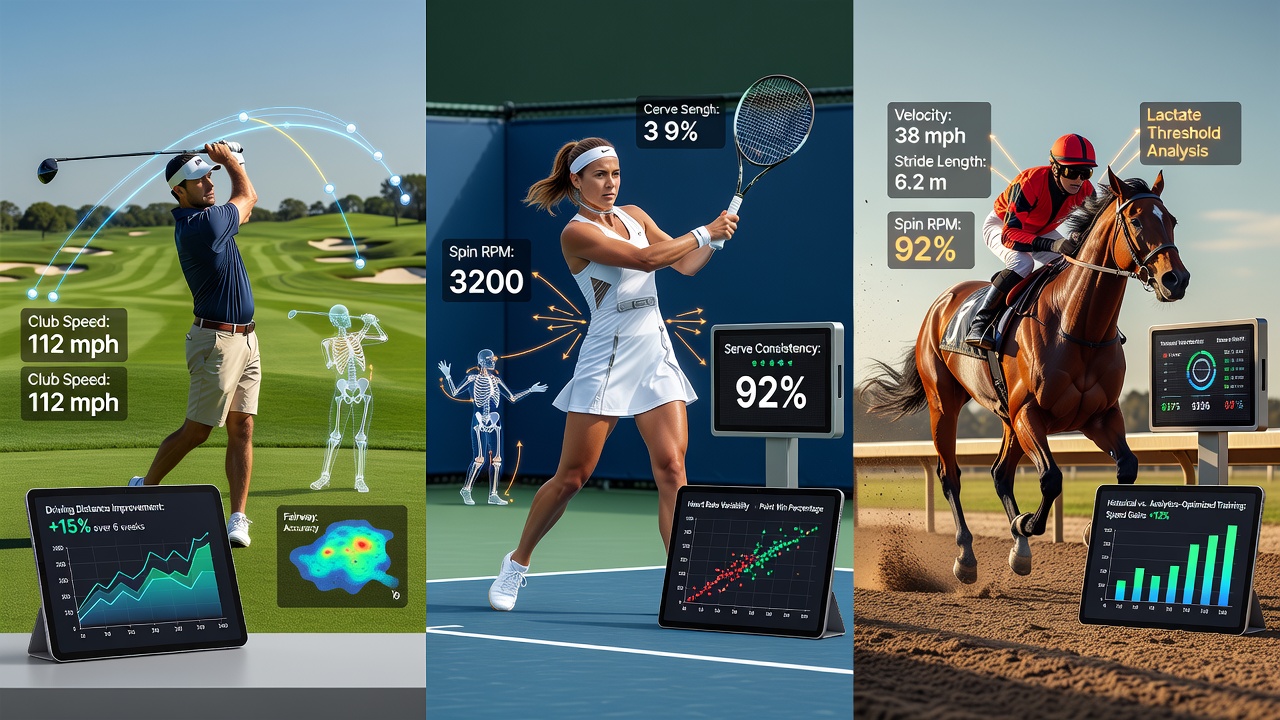
Training programs for athletes in golf, tennis, and horse racing across Britain now rely heavily on data analytics to refine techniques, monitor physical conditions, and adjust strategies in real time. Systems that collect metrics from sensors, video feeds, and performance trackers feed into software platforms that identify patterns and suggest modifications. These tools have become standard at facilities operated by national governing bodies and professional teams, where coaches integrate outputs from motion capture devices with physiological readings to build individualized plans.
Applications in Golf Training
Golfers at clubs throughout England and Scotland use launch monitor systems that record ball speed, spin rates, and launch angles during every session. Data from these devices allows coaches to compare swings against databases of professional performances compiled over multiple seasons. Players at the European Tour's performance centers, for example, review heat maps that highlight inconsistencies in club path and face angle, then repeat drills until the numbers align with target ranges. Research published by the University of Edinburgh's sports science department tracks how such feedback loops have reduced average handicap improvements by measurable margins among amateur competitors who train with the equipment.
Biomechanical analysis extends beyond the swing itself. Wearable devices placed on the lower back and wrists capture force distribution and rotation speeds during practice rounds on courses like St Andrews. Analysts then process this information to flag fatigue indicators that emerge after eighteen holes, prompting adjustments in strength routines or recovery protocols. Training schedules at several Scottish academies now incorporate weekly data reviews where coaches overlay GPS-tracked walking distances with heart-rate variability readings to prevent overexertion.
Developments in Tennis Preparation
Tennis players affiliated with the Lawn Tennis Association employ a combination of Hawk-Eye data and portable accelerometer units to measure court movement efficiency and stroke mechanics. The systems log split times between baseline and net positions, along with racket-head speeds at impact, creating profiles that coaches access via tablet applications during on-court sessions. Athletes at the National Tennis Centre in London review session footage annotated with these metrics, allowing them to target specific footwork patterns that reduce unforced errors in extended rallies.
Recovery monitoring has also shifted. Sensors embedded in training apparel record muscle activation levels and sleep quality scores that feed into algorithms predicting injury risk. When readings exceed established thresholds, programs automatically suggest modified hitting volumes or rest days. Data aggregated across multiple British academies shows correlations between these adjustments and fewer missed training days during the grass-court season leading into Wimbledon.
Advances in Horse Racing Conditioning
In horse racing, trainers at yards across Newmarket and Lambourn attach GPS units and stride-analysis sensors to horses during gallops. These devices capture speed, stride length, and heart-rate responses over varying distances and surfaces, allowing comparisons against historical benchmarks stored in centralized databases. When a horse's stride frequency drops below its established average during a workout, trainers receive alerts that prompt veterinary checks or changes in training intensity.
Nutrition and recovery plans draw from bloodwork and gait data collected daily. Software platforms used by several leading British stables cross-reference lactate thresholds with feeding schedules to optimize energy levels ahead of race meetings. Reports from the British Horseracing Authority indicate that yards adopting these integrated systems have recorded improvements in finishing times during trials, though individual outcomes depend on the horse's baseline fitness and the quality of the underlying data inputs.
Integration Across British Sports Facilities
National training centers now share anonymized datasets through secure platforms managed by UK Sport, enabling cross-sport insights into workload management. Golf, tennis, and racing coaches access dashboards that combine positional tracking with environmental variables such as wind speed and temperature, which influence performance predictions. This shared infrastructure supports talent identification programs that flag promising athletes based on movement signatures rather than traditional scouting alone.
Equipment manufacturers have responded by embedding more sensors into standard training gear. Clubs, rackets, and saddles now transmit data directly to cloud services where machine-learning models refine technique recommendations overnight. Facilities in the Midlands and the North of England have adopted these tools at rates comparable to those in the South, narrowing regional gaps in access to advanced analytics support.
Conclusion
Across these three sports, data analytics provide consistent frameworks for measuring progress and identifying areas for adjustment. The approach relies on accurate sensor input, reliable processing algorithms, and coaches who translate numerical outputs into actionable drills. Continued expansion of these systems depends on investment in both hardware and staff training at clubs and racing yards throughout Britain.